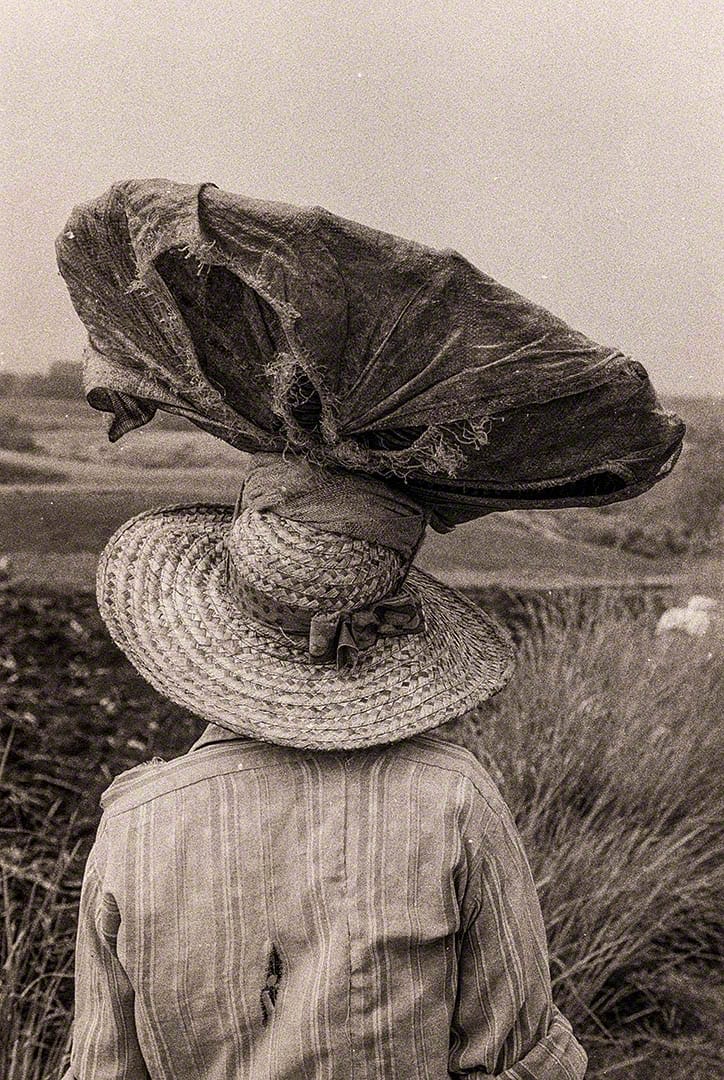
1952 rockley beach cr cprt
Lifestyle

The Genesis of Barbados Surfing


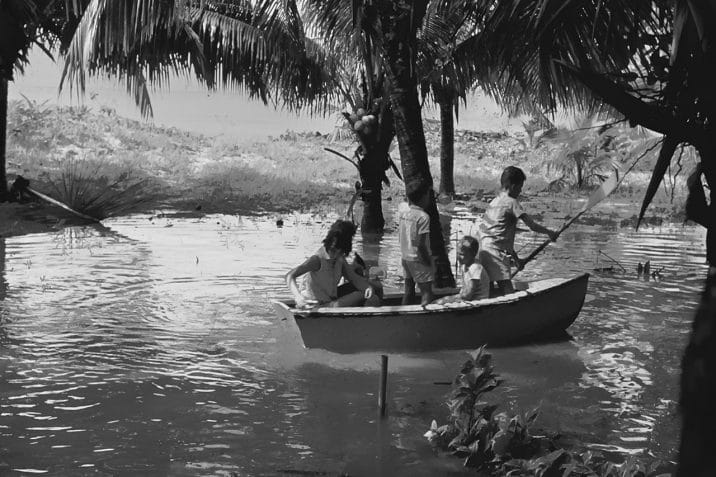
1964 flora flood peewee lois john mike craig john david gray

Flooding from Flora in Sept 1963. PeeWee - Lois, John, David Peterkin, John-Mike, Craig? 

Born American I grew up Bajan, with sand between my toes!

From 3 yrs old I was in and around the sea of Rockley Beach – freedom like nothing else possible. It was our safe pathway to go from the Hotel Royal at Hastings Rocks up to Crystal Waters or St Lawrence Gap.

Enough said – we grew up in the sea and around boats and were either swimming, body surfing or body boarding when waves were breaking at Rockley Beach.  

The grown ups all spent time body surfing or body-boarding so 'shooting waves' was something that was always done!

My parents had joined the Yacht Club and my Dad wanted to sail in the 'Sprat' class so he had the shipwrights east of Oistins build the sailing dingy he called PeeWee. My brother and sister, John and Lois, got to crew with him a few times, but I was ill at the time.

"Don't eat chicken-sh*t mixed with dead sand from under a chicken coup on a dare from your 2nd cousin!"


1961 mar kuvera 01 carlisle bay bridgetown
1962 craig on peewee

By about Easter 1964 Peewee had been a bit neglected and had got some rot – John (age about 16) got out his practical engineer self and grafted in a new transom and other bits.

While he worked in the gallery we had the top 100 on the radio on Saturdays - these were the days when the Beatles had from #5 all the way to #1 in the top 10 and many others further down the charts and on their way up  – very exciting days – finally music that grabbed you.

Once repaired John set her up with the Seagull outboard engine my Dad had and we were ocean mobile – yeah! We would cruise from Rockley up to Enterprize and we did a trip down to Blue Point near Gibbs on the West coast.

We had seen PanAm travel movies of Hawaii that led us to believe that the waves in Barbados were too small to stand up surf.

This view changed after John saw two guys surf at Rockley. He spent his Easter holidays building 'the red board' and Val and Alan Knowles and William Tomlin and others came by to check it out.

Surfing progressed very quickly with probably upwards of 40 people starting surfing by the end of summer '65. In Sept '65 Surfer Magazine published the article writen by Phil Wilson that covered the surfploration trip of Butch Linden and Johnny Fain from Malibu in Southern California -

Phil Wilson's Surfer Mag Article Sept. 1965

The Endless Summer Press Kit

https://bethorourke.com/malibu-surfing-association


We have recently been able to email Butch Linden and Phil Wilson and they confirm that they visited Barbados in Feb 1965 and continued on to Trinidad Carnival - we plan to add more details to this story going forward.

We had felt that the time line was too compressed, but if that's the visit then John would have had to build the 'red board' in Easter vacation of 1965 (we had felt '64) and have built the yellow board before the end of that same year? Seems too compressed.

Can it be that we went from having no boards at the end of Feb 1965 to having approx. 40 active surfers design and build boards and some actually surfing over-head waves at Batt's Rock as in this image below in less than ten months? - Dec 1965.

Image below :- The first image of Bajan surfers that I have in my possesion (I believe taken by Lois Burleigh) - Batt's Rock in December 1965 on the first over-head swell to be surfed there. dec 1965

The first image of Bajan surfers that I have in my possesion (I believe taken by Lois Burleigh) - Batt's Rock in December 1965 on the first over-head swell to be surfed there. dec 1965 1920px 1280x720
1965 val freight john alan high rock best

Image Above:-

1965 L to R:- Val Knowles (homemade), David 'Freight' Allan (first fibreglass import), John Burleigh and Alan Knowles (homemades), Highrock, Bathsheba 1965

The First Wave – Wooden Boards and Early Fibreglass 1965 - 1966


John Burleigh, Craig Burleigh, Val Knowles, Alan Knowles, William Tomlin, Chris Kieffer, Geoffrey Kieffer, Donald Duncan, Carlos Duncan, David 'Freight' Allen, Stephen 'Briar Dog' Thomas, Richard Thomas, Peter 'Bugs' Atwell, Stephen Godson, Andy Johnson, Wayne Nicholls, Trevor Nicholls, David Corbin, Peter Corbin, Peter 'Mice' Medford, Steve Lamming, Robin 'Scald Cat' Worme, Johnny Goodman, Mike McCleary, Andrew Watkins, Jim, Bill and Ken Edwards, Don Cole, Kent Cole, Charlie Laverick, Stud Cuke, David Foster, Freddie Gale, Suzanne Gale, Prof Edwards, 'Spew' Manning,          
Who am I leaving out!


These were the early days of surfing and we had great days going on surfaris all over the island exploring for new breaks.  I was lucky that John was old enough to drive and we had got a green Ford Anglia from Leroy Alleyne in 1965 before we moved to Lammings in St. Joseph.


At first it was Rockley and south coast spots, South Point, Freights, Dover, Ros Trevor, Brandons, West Coast – Paradise, Batt's Rock, Church Point, Sandy Lane, Miramar, Gibbs / Mullins, MayCocks, and into the heavier waves at High Rock or Parlour at Bathsheba and then Soup Bowl and eventually Duppy Umbrella.

The Second Wave – 1966 – 1968:–


Craig sold John Burleigh's original 'Red Board' to Roger Edghill for $40 towards end of '65, Robin 'Buff' Edghill, Doc Burke, Kent Goddard, Barry Barnes, Patrick 'Patch' Watson, Philip Edwards, Jimmy Duncan, John Mike Peterkin, Michael 'Spock' O'Dowd, Adrian and Barry Gale, Maxie Taylor, Maxie Storey, Tony Bowen, Dick Lynch, Suzy Lynch, Old man Lynch, Mark Ward, John Mahon (Gibbs), Chas Jorden, The Brotheren Boys - Brian Corbin, Pile, Emptage; Ian Emtage, Warren McKinney, Art Taylor,

Post 1968 World Championships in Puerto Rico:–
Gary Moreno (Oregon); Annette Hughes (Newquay, Cornwall); Eddy Luersen (Long Island); 1969 Crab Hill visitors - Joe Blair (Hawaii),

1966 craig ron john homemade yellow highrock

1966 craig ron john homemade yellow highrock

1969 joe blair my7 6 from 9 6 ron crab hill
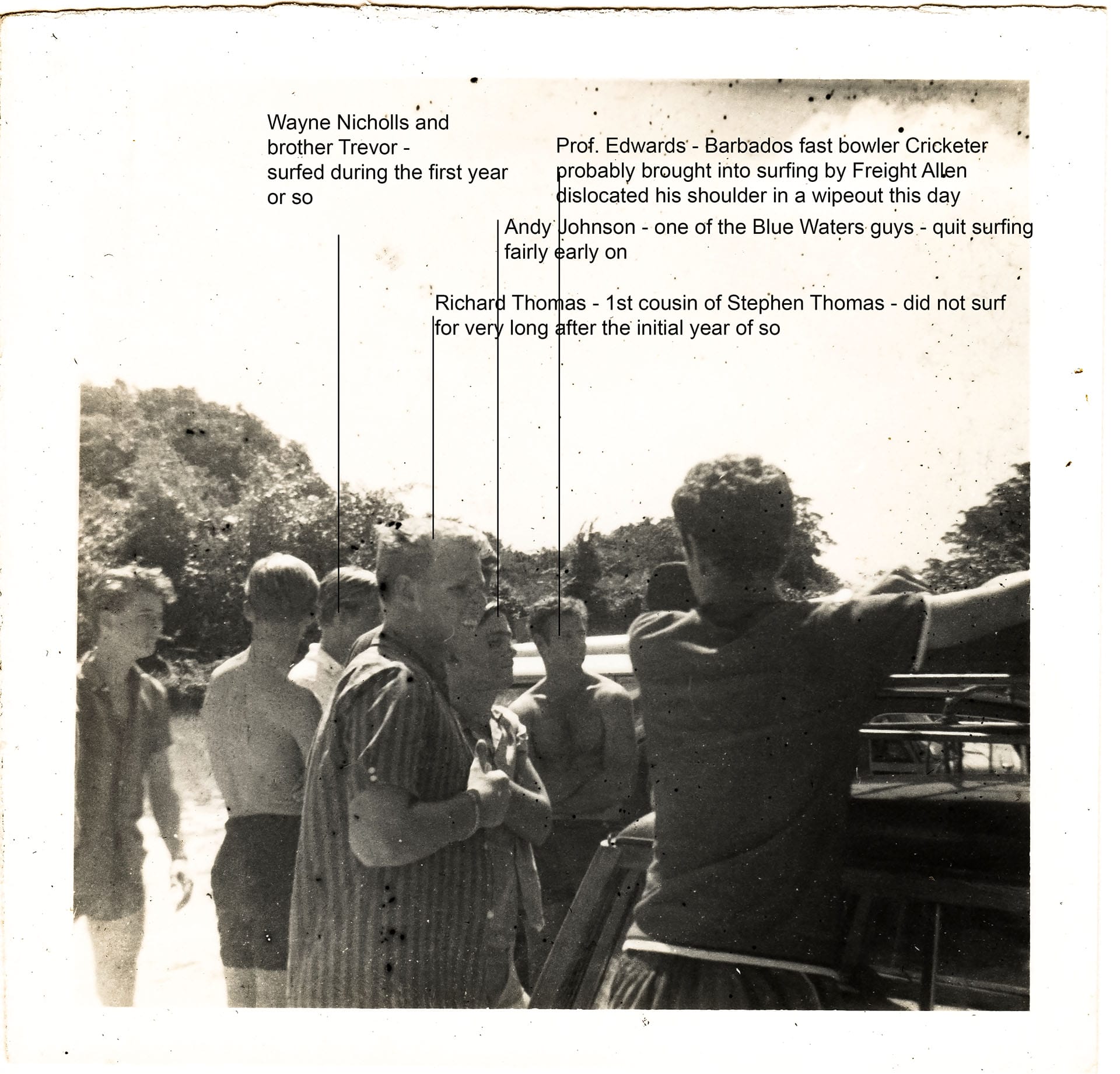
1969 joe blair my7 6 from 9 6 ron crab hill

1965 dec batts rock epic day

The Third Wave – The Bathsheba Crew - 1969 – 72:–


I went to England in Aug 1970 and by the time I returned on holiday in Dec 1971 all the Bathsheba crew were surfing – it was great to get another group of friends and get to know all those people over the 70s

 – Edmund 'Rat Race' Oliver, 'Snake' Headley, Punk, Saint, Sea Cat, Fireman, Desmond, Robin Holdipp, Joe Gamble, 

craig soup bowl 1975 joe blair 7 6

craig soup bowl 1975 joe blair 7 6

Saint at Soup Bowl

Saint at Soup Bowl - circa. 1978

Read More
Barbados Fishing Boat Taking Shape - Skeleton
Lifestyle

Shipwrights of Shermans

by Jackie Faine & Craig Burleigh  
July 1977

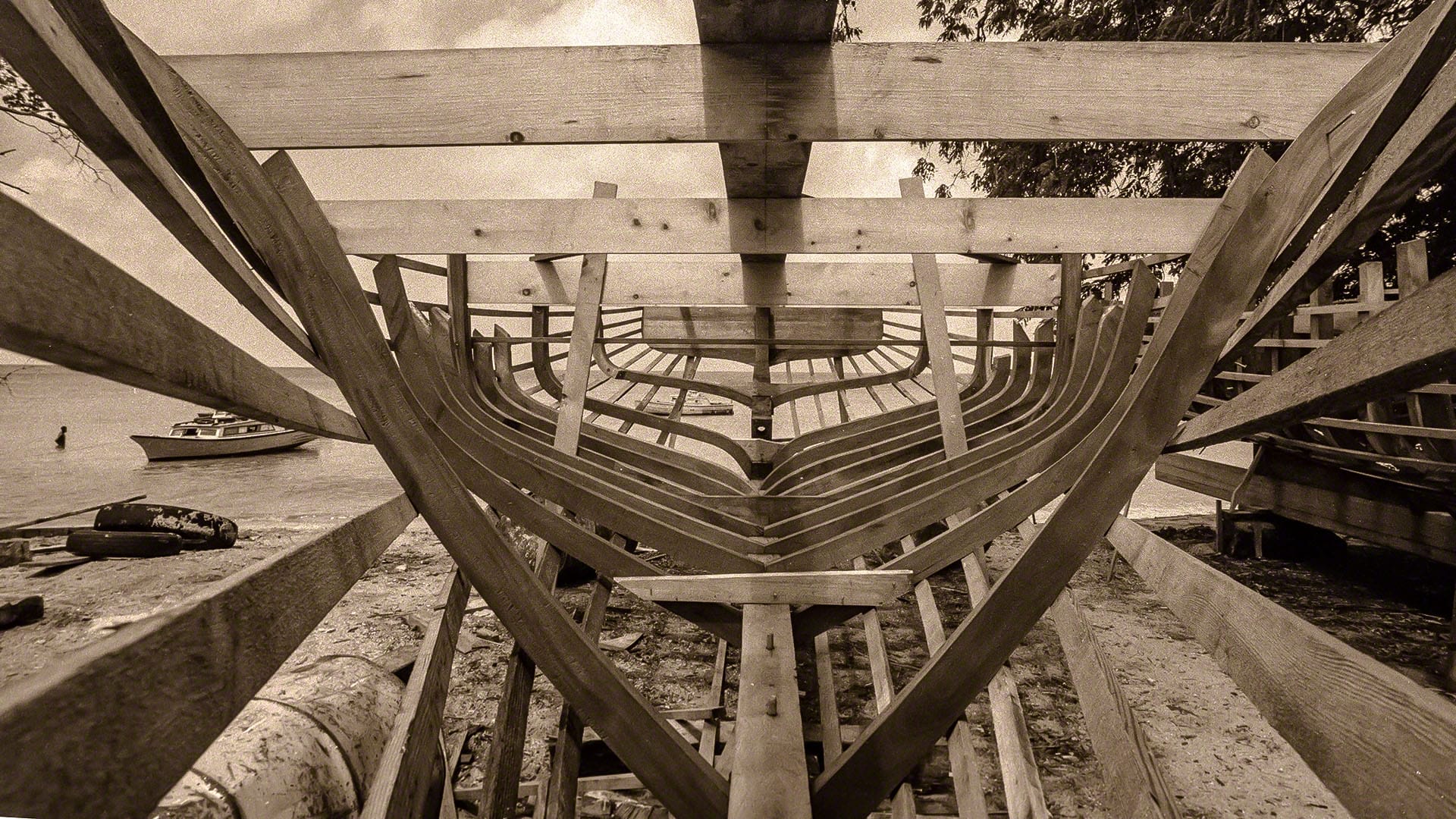
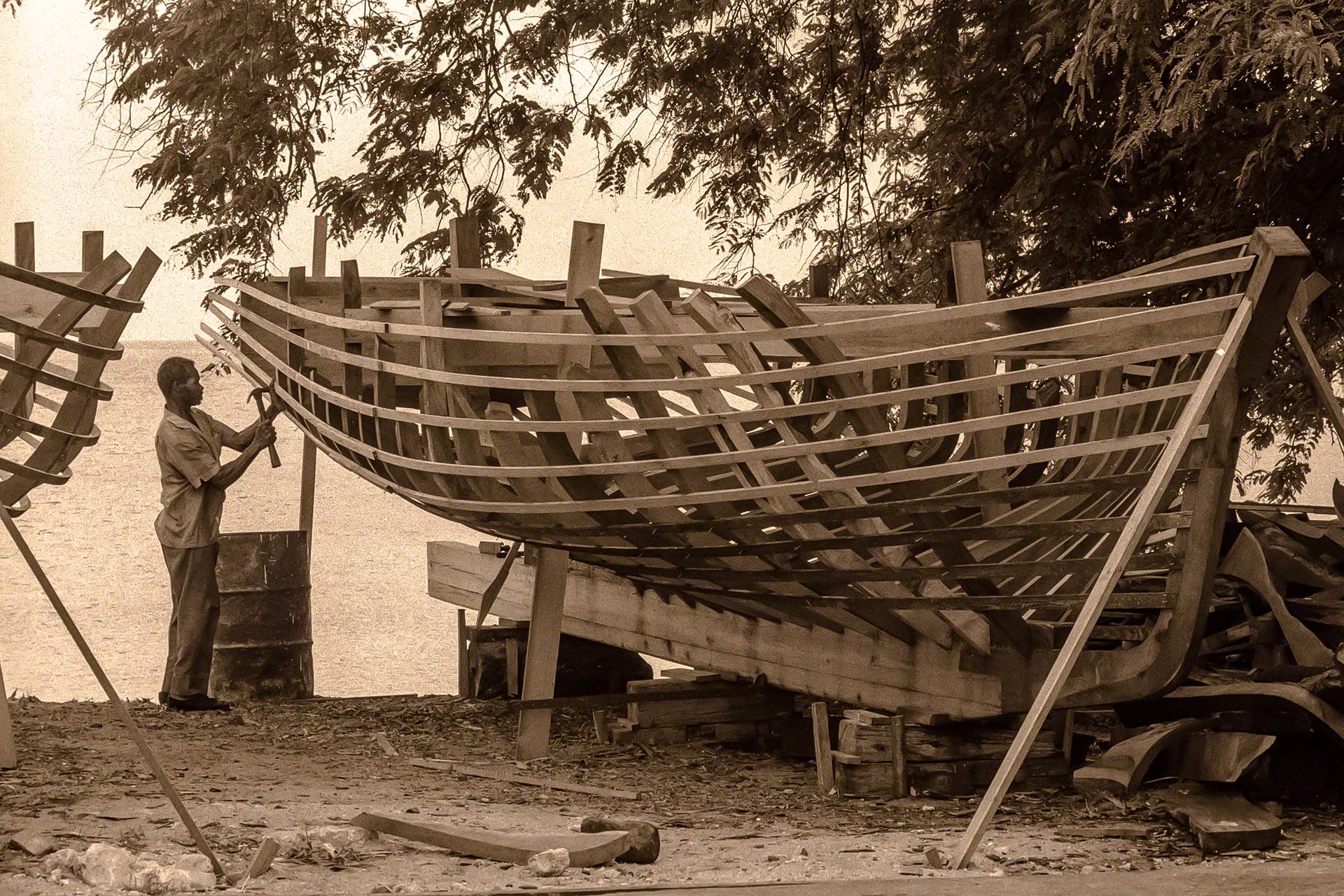
Boatbuilding must have been necessitated from the time of the early inhabitants of Barbados. For St. Peter's Shipwright Selwyn Douglin, his career began in 1937, and for this generation of ship builders, boat building has been booming since then. Demand has been growing with time. "When things begin to roll fast, everything gets faster, even in the building of boats," Selwyn Douglin reports.

Mr. Selwyn Douglin brings a new Barbados Fishing Boat into shape July 1977 cd1-1-11

Mr. Selwyn Douglin brings a new Barbados Fishing Boat into shape July 1977 cd1-1-11

Many of them have had no formal schooling in a craft that is as old as civilization. Some of them have never, and may never experience a fishing trip at sea, and their labours may keep them away from knowing what it is to eat a fresh fish at sea: that is eating a fish as soon as it is caught; before it begins to deteriorate on the floor of the boat. Fish that when you start to clean it the heart is still beating.

But without them, hundreds, perhaps thousands, would be without a livelihood. Thousands of pounds of fish would still be in the ocean. Those who could afford more than $30,000 would have to resort to fibre glass crafts, or import their fishing vessels at a much higher price.

Prospective owners commission the shipwrights to build their boats at $25 a day, or less, depending on the financial status of the owners. Boat building is a craft few Barbadians now possess; a craft fewer are willing to learn. For the shipwright is an almost forgotten man, ignored until one hears the beating of his hammers, the grating of his saws, or watches him carving out of raw, crude timber, sea-worthy vessels to exploit the sea and bring ashore, sometimes large catches that feed an estimated 238,000 Barbadians.

Boats in Various Stages of Construction cd1-2-26

Barbados Fishing Boats in Various Stages of Construction cd1-2-26

Shipwrights are scattered around Barbados; at the south at Oistins and Silver Sands in Christ Church; to the east at Bath, St. John, and at other locations where villagers make a living out at sea. Shermans in St. Peter, is one of the oldest and still the main boat-building centre in Barbados.

Correspondents Craig Burleigh and Jackie Faine visited the area and talked to the boat builders there, and reported on the fulfillment shipwrights at Shermans enjoy.

Boatibuilding must have been necessitated from the time of the early inhabitants of Barbados. For St. Peter's Shipwright Selwyn Douglin, his career began in 1937, and for this generation of ship builders, boat building has been booming since then. Demand has been growing with time. "When things begin to roll fast, everything gets faster, even in the building of boats," Selwyn Douglin reports. 

The Curves of a boat hull 1977 cd1-2-19

The Curves of a boat hull 1977 cd1-2-19

The life of a shipwright is a particularly interesting one; from the selection of the wood they use, to the launching ceremony that is spiced with a gallon of locally—blended rum.

Their choice of timber comes from pine or green heart (Guyana); mahogny (Barbados), or sometimes white wood from St. Vincent or Dominica, which the shipwrights say, is well rated. "The sea water almost seems to preserve it," they say. The idea is to use a hard wood. Pine, usually imported from Belize, is used mainly for constructing the keel and planking. Green heart is used at the base of the keel, as this timber is extremely durable and can take the wear when hauling in or launching the boats.
Mahogany, which is felled locally from plantations, gullies or woods, is used for the stem, dead woods, horn timber, stern post, frames and transom. It absorbs less water than most woods.

Mr. Douglin and tool box he shares with another shipwright

Mr. Douglin and tool box he shares with another shipwright cd1-4-07

Mr. Babb cuts a rib by hand - these have multiple angles to maintain

Mr. Babb cuts a rib by hand - these have multiple angles to maintain cd1-1-07

Shipwrights of Shermans - Mr. Babb July 1977 cd1-2-14

Shipwrights of Shermans - Mr. Babb July 1977 cd1-2-14

After the keel is placed on a level, the stem, dead woods, horn timber, stern post and transom are constructed in that order. The centre frame is made up and placed. The shape and curve of this frame is used to determine the shape of the following frames. Battens, thin strips of wood, are placed temporarily, running from the stem via the centre frame to the transom, nine or ten battens to each side. These form the basic shape of the hull.

It takes about 20 frames, one foot apart, for the construction of an average fishing craft, and a metal rod, which is used as a flexible template, determines the shape of each frame.
While wood–working tools are a must for shipwrights, their eyes are the most important asset of their profession. The curve of each boat is checked by sight.

Mr. Douglin shapes a rib

Mr. Douglin shapes a rib cd1-4-10

They conform with Government regulations, a floor, which must be kept painted, is built in the boat, so that catches cannot be contaminated with diesel used to operate engines.

Shipwrights not only construct boats, but theirs is a responsibility too, to maintain them, and every year, during the month of August, at the end of the traditional fishing season, the boats are hauled from the sea, checked for defects and repairs made.

The floors are painted; the interior cleaned and repainted, and the boat bottoms, which collect crustacea, mosses and other microscopic marine creatures cleaned. If there is a leak, cotton wick, soaked in ordinary paint is forced between the gaps to make the bottoms water tight again, and then dry putty applied and later painted over with a special anti~fungus marine paint.


Shipwright Mr. Douglin shapes a rib

Shipwright Mr. Douglin shapes a rib cd1-4-05

Since the late fifties, there has been a marked transition from sail to engine. While half the cost of building a boat (between $26,000 and $30,300 Bds), is spent on the engine, it is found that engines are safer than sails, and no one today dares substitute the idea of an engine with sail.

Sails threw away too many lives, and on very windy days it was not unusual to lose one or two boats. Engines are reliable and are often checked. Some owners have their own mechanics, and Government engineers also check to ascertain the sea-worthiness.

Boys who help haul out the boats get to have a ride! cd1-3-28

Mr. Babb gets the curve for next rib cd1-2-10

Mr. Babb gets the curve for the next rib cd1-2-10

Mr. Douglin - Another Day at the Office! Aug-1977-cd1-4-14

Today, there are less than 40 shipwrights in Barbados. Few of these are young adults. There seems no interest among the young in learning the shipbuilding skills. A few have tried, but they all get weary and disheartened and give up in resistance to the great physical exertion needed, as well as patience.

So as Mr. Douglin puts it: "All young people want to do is push a button." Boat—building requires patience. It is all manual labour, but the perseverance of the shipwright is striking. His is a skill and artistry that should not be allowed to die.

Government tractor perpares to haul out another boat cd1-3-29

Government tractor perpares to haul out another boat cd1-3-29

A Barbados Fishing Boat awaits an engine and some finishing touches

A Barbados Fishing Boat awaits an engine and some finishing touches. July 1977 cd1-1-20

Read More
Rasheed Boodhoo Displays his Art work 1976
Lifestyle

Rasheed Boodhoo – A Young Artist

by Jackie Faine & Craig Burleigh  
June 1976

July 2nd, 2022

Since this article was written in 1976 Ahmad R. Boodhoo affectionately known as Rasheed, has continued his journey in art!

Please check his links to see what he's been up to over the last 46 years. Here's his Facebook page -

https://www.facebook.com/Rasheed-Boodhoo-Photoartist-220853788625249

Rasheed Boodhoo PhotoArtist


The Article from 1976:-


" Mostly my love for art put me where I am ", says Rasheed Boodhoo as he looks back into his creative history and assesses his progress. He nurtures the talent for art, which he believes has been bestowed upon him, by constant use of pastels, acrylics and charcoal. At the age of eighteen, Rasheed has a prominent style. He creates images mainly of semi-abstract human form and concentrates on portraiture. 

Amhad Rasheed Boodhoo - Artist - 1976

Amhad Rasheed Boodhoo - Artist - 1976 h3-06-14

A keen study for him is the famous Bob Marley, a portrait of whom he has recently painted, titled " Dreader than Dread ". The blend of multi colours in this piece emphasize the soulfully pained expression on the perspiring face of the musician during performance. Therefore, it is not only a face, but a design in which emotion is portrayed.

Amhad Rasheed Boodhoo - 'Dreader Than Dread' 1976 h3-06-26

Amhad Rasheed Boodhoo - 'Dreader Than Dread' 1976 h3-06-26

Most of Rasheed's schooling was is Guyana, his native country which he left seven years ago. Impressed by drawings of older scholars, he went to work tracing; he was particular1y fascinated by one friend called Paul, who was left handed, “ I loved to watch him draw ".

Rasheed used his childish counterfeiting to communicate with the flattering oposite sex at that time. Laughing at his naivity then, he recounts when he really embraced art with an original approach.

It was here in Barbados, in 1973, when he met Omowale ( Allan Stewart ) at a Yoruba art display. Reeheed had been copying photographs and making up " dummy " film posters, but on seeing the exhibition he says, " I really knew what art was like ". His interest in this work resulted is his joining the group at Yoruba, under instruction of Omowale himself. Resheed treasures this as the birth of his art.

He remembers the group encouraged him, " I always use what people see in me to further myself ". During December, 1974, he exhibited work as part of their group show, after completing one year of instruction. 

He discovered the Art's Council, and as a member has exhibited at the Pelicen Art Gallery, and at this year’s June Festival of Arts at Barclay's Bank.

Ahmad Rasheed Boodhoo shows some of his work 1976 h3-06-25
Rasheed at work h3-02-09

Rasheed has worked towards CARIFESTA (Caribbean Festival of the Arts) and is presently working towards NIFCA (National Independence Festival of Creative Arts). As an exhibiting artist he forms an abstract relationship with his viewer; his title of image evokes the viewer to use imagination in interpretation.

One of his originals in acrylics, titled " Love and Faces ” has a strong appearance of a few profiles, but Resheed has managed to subtbly include the word " love " and numerous faces other than those in the center of interest.

Rasheed is thinking of adding a new dimension to his work. He thinks sceneries will create interest as his viewer will be able to relate to a known place in Barbados.

The Yoruba art group with which Resheed has been involved hes broken apart, " Each guy works separately but there is still a central communication ". He hopes that in the near future the members wil1 get together for a group show.

Rasheed admires his fellow artists, " Every artist, no matter who, has inspired me to go on". He holds special  feelings for Karl Broodhagen, and holds Omowale as "the BEST" as a result of his personal experience.

Rasheed has a self acclaimed " curious mind ". He is endlessly experimenting with new techniques and media: paper craft, sculpture using plasticine, a bit of water colour and pen and ink. Recently, he discovered that spray paint ” ate " foam when he was painting a design on cloth using paper stencils, spray paints and a piece of foam as a backing material. He is trying to manoeuver this discovery into a creative angle, " I like to specialize myself in anything - anything in art ".

Rasheed's family are proud of him, "My mother, she loves my ART ". Having a close relationship with his older brother is an asset to him. His brother constructivly critizes his art, he tells Rasheed " You don't write your name, you draw it ".


There may be a hereditary tie as far as Rasheed's Kung Ku dancing is concerned. His father once made up a part of a family acrobatic team in Guyana. Rasheed similarly is gifted with physical flexibility and retains what he calls a "neat shape."

Presently he is practicing a Kung Fu dance with other enthusiasts, in hope to have a presentation during NIFCA. He is deeply interested in the Martial Arts and admires Wang Yu and Bruce Lee, two Kung Fu kings in the movie world. Rasheed stocks a huge library of books on these topics, including Karate, this hobby he considers an art, " I don't believe in fighting ". 

However Rasheed does believe in self defense. As a side line of these interests he is trying the NUNCHAKU but admits that he is not very good at it, it requires grave concentration.

Rasheed, who is very independent and a bit of a " home child ", is a hard working youth. He works at Shopper's Snackette, Black Rock using a bicycle for transport. He attends the snackette for long hours so that he may have money to buy art equipment, " That is why I'm really working ".

He is calm and light hearted about life. He likes to be funny and amusing, yet, can be deeply philosophical; he considers religion a personal part of him which he can " hope to share with some one else".

With the opinion that the DESIDERATA is beautiful he says, " It is the whole life time of a man ", and Rasheed often feels that " the world is like a sheet of paper and we are like paintings on it".

Read More
Fun loving boys leave the school linked with Jama Masjid 1976 h3-10-33
Lifestyle

Learning the Way in The Barbadian East Indian Muslim Community

by Jackie Faine & Craig Burleigh - July 1976

July 7th, 2022 - My purpose for developing BarbadosIslandLife.com was to have a platform to present the many images and stories that I have in my files. I had begun scanning the images from the East Indian community story and we were finally able to find the notes and type written text that Jackie had done for these. I scanned and prepared the text for online presentation, but we still needed to put names to many of the faces. 

We were able to contact Suleiman Bulbulia and Sabir Nakhuda of the local Muslim community and they were excited to learn of our work as they have been researching and writing the history of the East Indian community in Barbados.

We wish to thank them for the work they have done in helping us – going forward, they will be connecting these photographs with the stories of the people in the images and we look forward to hearing of what some of the people have done in their community and the world at large.

To learn more about the East Indian community in Barbados please read –
Jama Masjid 70 years –
https://issuu.com/muslimheritagebb/docs/jama_masjid_70th_emagazine/2?ff&fs=e&s=cl

Bengal to Barbados: A 100 Year History Of East Indians in Barbados   by Sabir Nakhuda
https://www.amazon.com/Bengal-Barbados-Year-History-Indians-ebook/dp/B08JKRDY1B

In the main image above -
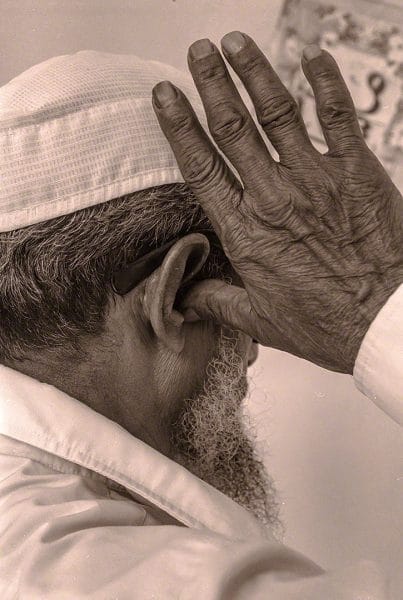
Heading for home after a day at Islamic  school  - Farouk Samrodia at right, Zakaria Bhana in center, Yahya Bhana at left and Umar Bhana in the back

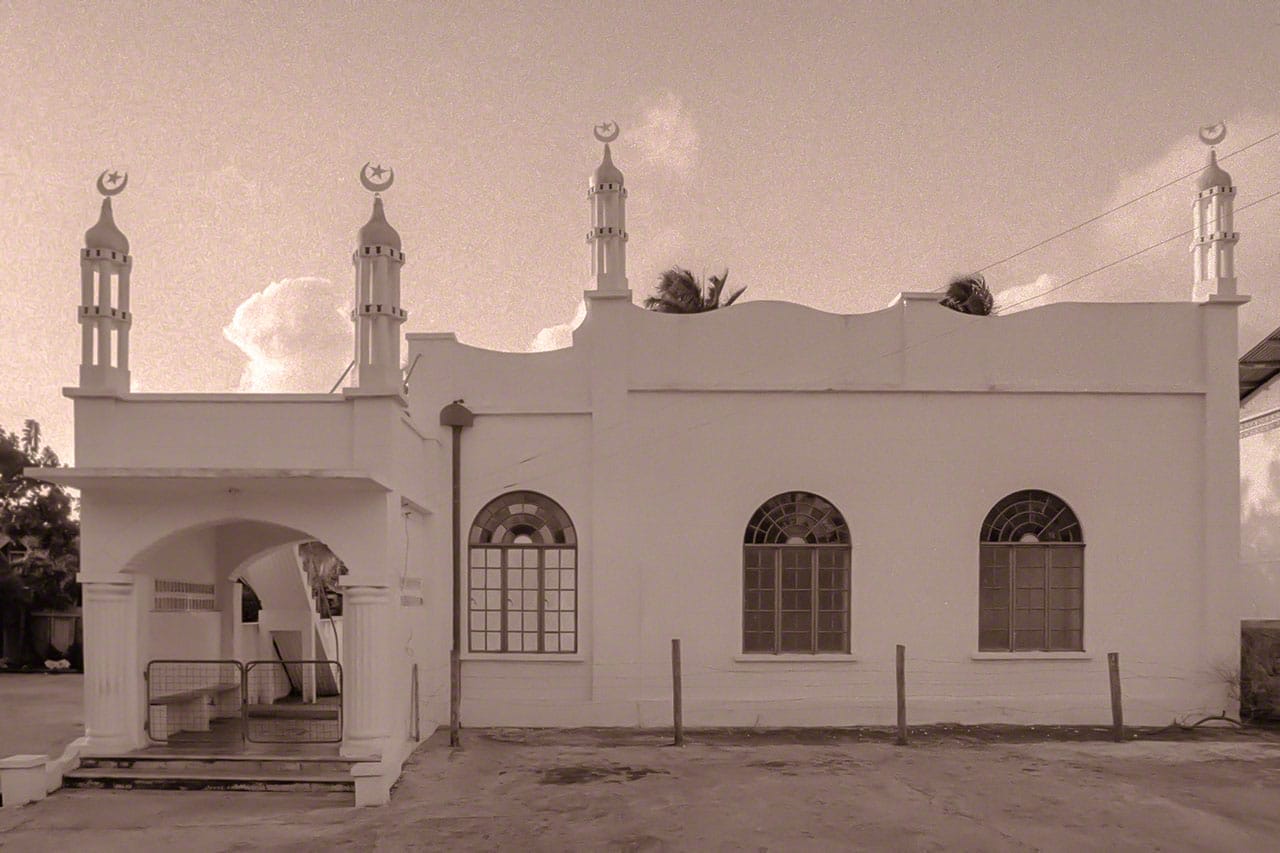
Madina Masjid on Sobers Lane 1976 h3-07-23

Madina Masjid on Sobers Lane Built in 1957 1976 h3-07-23

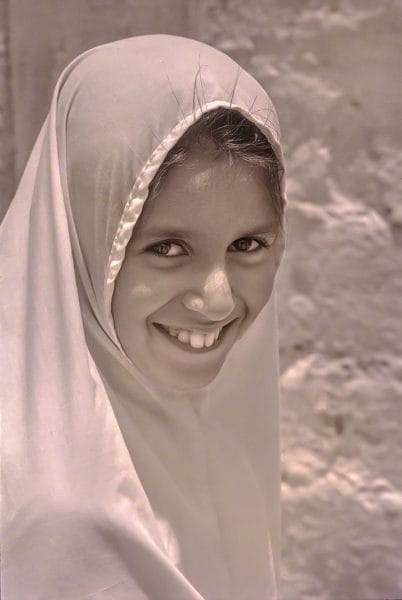
Nasima Manjra welcomes us at Jama Masjid Islamic School

Nasima Manjra welcomes us at Jama Masjid Islamic School

School children at Jumma Masjid 1976 h3-10-04

The original article from 1976 - 

There are two calls given when a Muslim child is born -

the first call, which is the ADHAAN, is said in the right ear loudly and calls the new servant of Allah to the worship of her creator. It is said also on behalf of the child's well being. 

The second call, the IQUAAMAH, is said in the left ear and gives submission to Allah. 

So begins the religious life of the Muslim.

A few days after birth, a male muslim child is circumcized. In Barbados surgeons are called upon to do this, but in India, barbers perform this rite. On the seventh day following the birth, a ceremony, AQIQUA, may be held. This is also the day when the child is named and hair and nails are cut.

School children leave the school at Jumma Masjid 1976 h3-08-24

School children leave the school at Jama Masjid 1976 h3-08-24

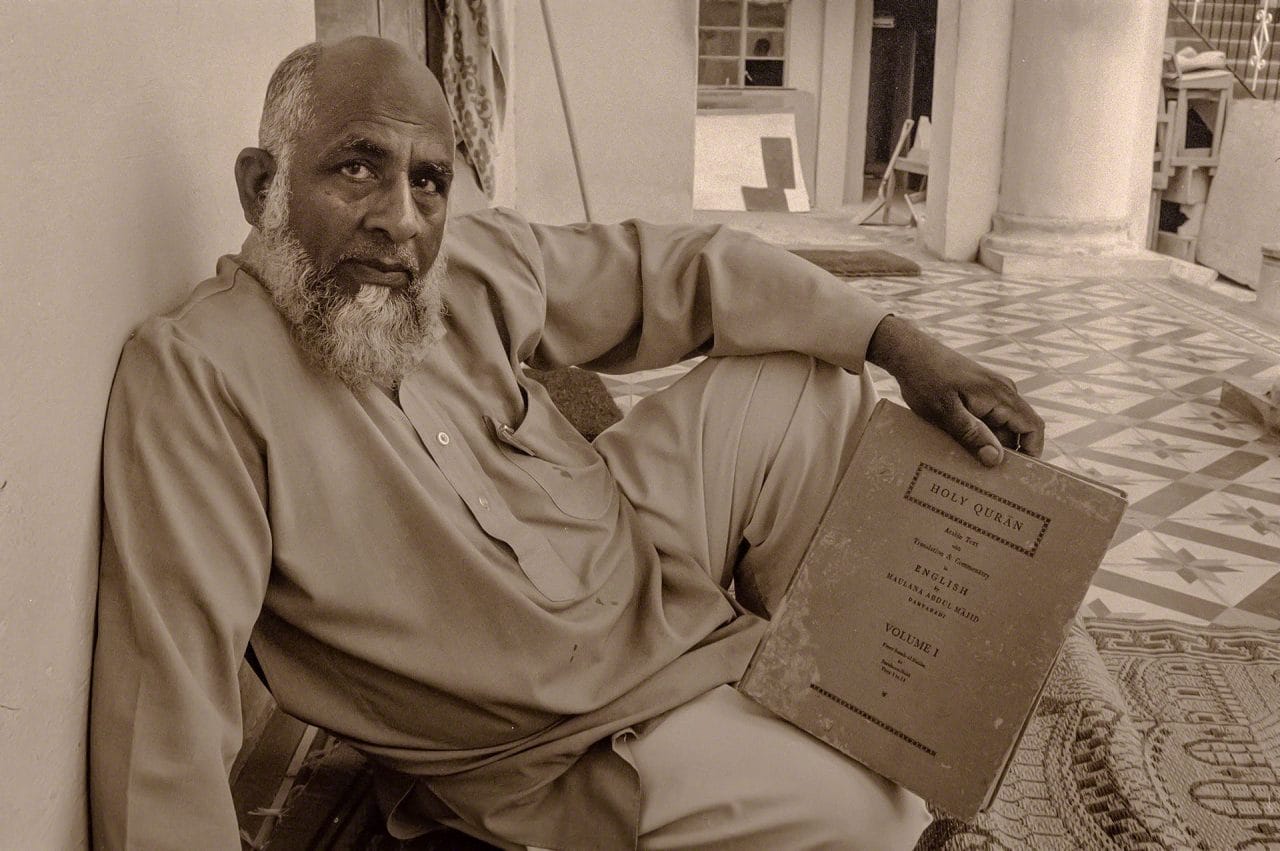
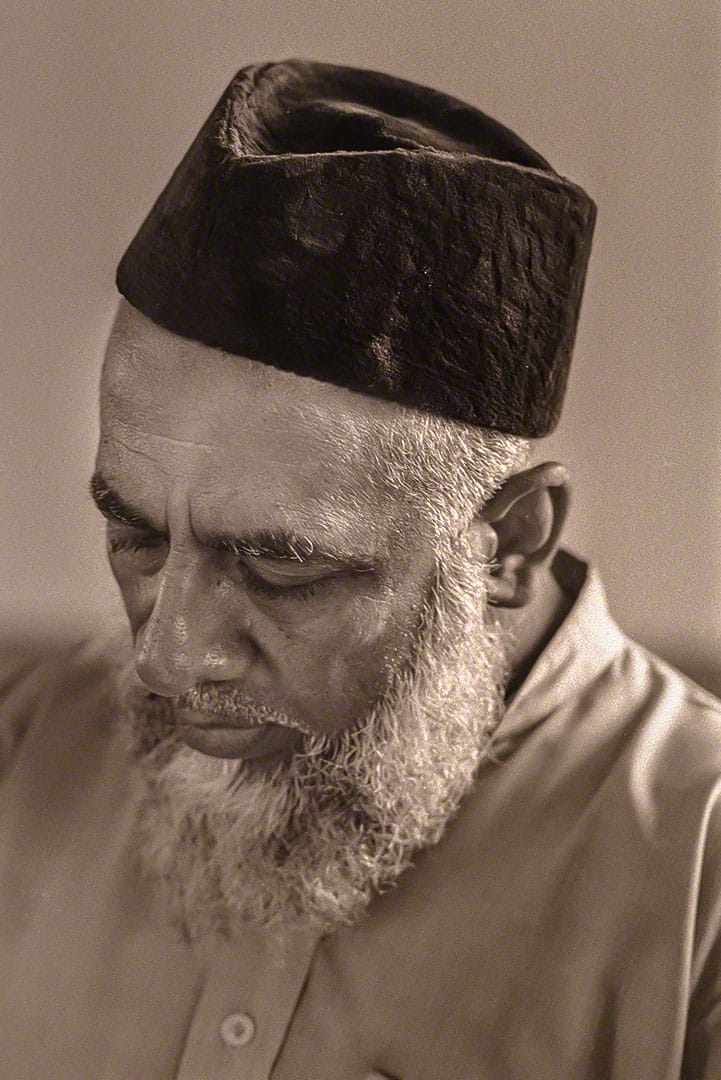
Maulana Saied Piprawala, Jama Masjid 1976 h3-03-28

Maulana Saied Piprawala, Jama Masjid 1976 h3-03-28

Mariam Piprawala and Grandkids 1976 h3-04-02

The Piprawala Family - Kensington New Rd

Rashida Piprawala and Children h3-04-15

Piprawala Household h3-04-15

Mariam Piprawala Roast a Breadfruit h3-04-09

Mariam Piprawala Roasting Breadfruit h3-04-09

Maulana Saied Piprawala at Jama Masjid, 1976 h3-04-05

Maulana Saied Piprawala, Jama Masjid 1976 h3-04-05

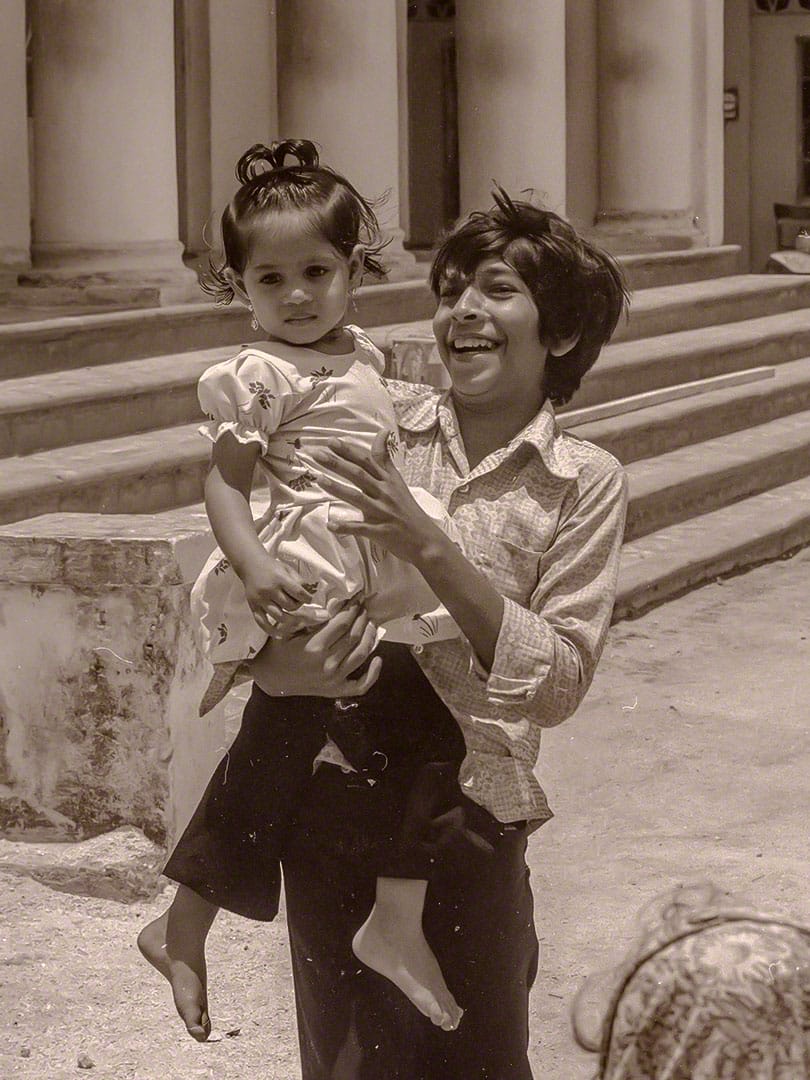
Jama Masjid School Children - Brother Carries Sister h3-10-12

Jama Masjid School Children - h3-10-12

The more wealthy muslim family may invite friends and family to celebrate the joy of a new born. Food may be served, but pork and alcohol are not permitted. Tokens to the poor are of prime motive for such festivity and meat is shared and money is given. 

A goat or sheep is usually slaughtered and at least one third is given to the poor. The worth of the equivalent weight of silver to the cut hair is donated as a charitable gesture. The hair and the umbilical cord of the baby is buried, preferrably in the cemetry.

The Muslim child is not different to other children. She keeps toys and enrolls in normal school, but the religious mainstream is of continuing importance. Male or female, the child at the age of five years attends either one of the two Islamic schools. There is one at Sobers Lane and another at Kensington New Road. Just over one hundred children attend these schools, which are satellites of the two Mosques.

Muftis at Jumma Masjid 1976 h3-10-26

Teachers Hafiz Yousuf Samrodia and Hafiz Ibrahim Bhamjee at Jama Masjid 1976 h3-10-26

The classes are of a doctrinal nature and are conducted from four to seven o'clock in the evenings during school terms, and from nine to twelve o'clock in the mornings during vacations. These sessions do not offer a variety of subjects. The hours allow the Muslim child to receive a regular education, mathematics being of particular fancy to most East Indians.

Islamic teachers, called Molvis, are familiar with the Quranic text and recitation and have the responsibility of educating the children. On the island there are four Molvis. They are of great importance to the Muslim way of life. Molvi is the title given when Muslim men attend higher religious schools and are successful in acheiving detailed knowledge of the Muslim religion after a duration of about nine years. 

Jumma Masjid on Kensington New Road 1976 h3-12-19

Jama Masjid on Kensington New Road h3-12-19

Mohammed Degia discusses Muslim teachings at Sobers Lane h3-07-12
Mohammed Degia at the Madina Masjid h3-07-21
Mohammed Dagia explains a point about Muslim life 1976 h3-07-06

Mohammed Degia explains a point about Muslim life 1976 h3-07-06

The more advanced teacher in knowledge and practice is addressed Maulana, meaning " our Teacher ". Two of the four Molvis here are Maulanas.

"........ And it is Thy Lord the Most Bountiful Who teacheth by the pen Teacheth man that which he knew not."

The learning of the recitation of the Holy Quran by heart in arabic is of high value to devoted servants of Allah. The learning of the alphabet and words and constant recitation help the children to attain this praise worthy result. 

Arabic is not learnt as a language, but the rolling sounds of the language become the rythmic recitation of the Quran. As many children become adults they strive to recite the Holy Quran by heart, and so become what is known as HAFIZ. In Barbados eleven people, one of which has been taught here, can recite the Quran by heart.

Children learn to pray together. The ADHAAN and IQUAAMAH are the first and second calls respectively, and their translations are taught at an early age. When the children are seven years of age the parents encourage them to pray, " The service of worship is better than sleep."


The muazzin recites the Adhan calling worshippers to Jumma Masjid 1976 h3-11-37

The Muazzin recites the Adhan calling worshippers to Madina Masjid 1976 h3-11-37

The muazzin recites the Adhan at Jumma Masjid 1976 h3-11-40

The Muazzin recites the Adhan at Madina Masjid 1976 h3-11-40

The muazzin of Jumma Masjid 1976 h3-11-41

The Muazzin of Madina Masjid 1976 h3-11-41

Parents are expected to insist on the children going to prayers when they are ten years old. Praying consists of numerous body movements – the minimum daily exercise. Spiritual consciousness, faith and confidence in prayer are emphasized.

When the children become adults the men folk pray at the Mosque, and the women, at home. The Muslim prays five set times per day, the special day being Friday, AL JUMU' A, when a special sermon is given making the noon prayer longer.

Other than the arabic recitation and prayer the children learn GUJRATI, an every day Indian provincial language. Also learnt is URDU, the official language of Pakistan; URDU is a mixture of Persian and Arabic and is treated as the second language of Muslims of Pakistan and India.

Madina Masjid July 1976 h3-07-25

Madina Masjid July 1976 h3-07-25

The child at puberty or mid teens is responsible for his own religious actions to Allah. Unlike most teenagers, the Muslim youth does not have an involved relationship with the opposite sex, but is allowed platonic relationships. The concentration is geared to a life time quest of peace, submission and obedience to the entire will of Allah.

Parents make a choice of partners and contact is allowed after marriage. This type of discipline does not disturb the Muslim youth as it is part of their piety to Allah; parents are respected as the more wiser because of their own experiences.

The young Muslim girl busies herself with general house work. She is taught by women within her family to sew and cook. Sometimes further instruction in sewing is given by a community dressmaker. This way the Muslim woman is able to make clothes for herself and her family in the future. Most young men become involved in businesses, social work and furthering their religious knowledge. Both men and women are noted to be hard workers.

Mohammed Dagia at Madina Masjid 1976 h3-07-14

Mohammed Degia at Madina Masjid 1976 h3-07-14

The young adult is not likely to frequent entertainment spots and discotecs as music, the high light of such places, has restrictions. Drums, wind and string instruments are associated with brothel-like behaviour and are forbidden.The danger in music is that it evokes extreme reaction, it can strengthen " the sweetness in mangoes, the bitterness in aloes ".

One instrument, the DUFF is allowed. In days of old the people of Medina welcomed Mohammed on his arrival from Mecca with duffs and chanting voices. Music is in nature and a realization of natural beauty is lawful, " Music stems from the same footing as poetry and, "Song lives in nature".

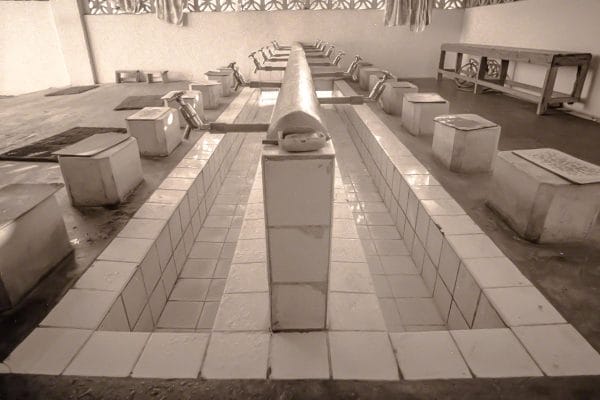
Wudhu is the ritual washing performed by Muslims before prayer

The Islamic Center at 49 Tudor St was established at the beginning of this year – 1396 by Islamic lunar calendar – with the financial aid of the more affording members of the Muslim community. A group, of which the majority are young adults, was able to reform what was a furniture factory into a meeting place.

All is not learning here, and through group projects, table tennis, darts and other games have been provided. All people are welcome to form a part of the group and ages vary. There is no discrimination and the centre caters to non–Muslims as well.

A summary of the seven authentic books of the Prophet called the HADITH is used and spirits conversation on Muslim values and the laws of Isalm. Discussion is on Thursday nights and religious questions and problems are dealt with. On Wednesdays and Fridays, arabic is learnt.

According to the individual's progress and knowledge she is grouped as beginner, middle or regular. On Friday nights the training is more advanced. Some of those who teach on Wednesdays attend this Friday class which is conducted by a Molvi. Plenty of time is given to the learning and mastering of Arabic.

Table Tennis at the Islamic Center July 1976 h5-06-09

Recreation at the Islamic Center July 1976 h5-06-09

M. Degia leads the talk at the Islamic Center July 1976 h5-06-11

M. Degia leads the talk at the Islamic Center July 1976 h5-06-11

Darts at the Islamic Center July 1976 h5-06-06

Darts at the Islamic Center July 1976 h5-06-06

The Quran is accepted as an authentic doctrine because of it's young age and its high credibility in that it had a sole conveyor, Mohammed, the last in a long chain of prophets. Although Muslims are very similar to Christians, they find it difficult to accept the genuity of the Bible. Their point of view is that it has been passed down over a long period of time into changing hands and languages, whereas a direct copy of the original Quran remains preserved in Tashkend, Russia.

Since about 1927 Muslims have been coming to Barbados. A lot of them are from Surat district in India, which is "136 miles off Bombay side", seeking a place where they can make a better living. Most of them live in the Fontabelle area, namely Kensington New Road and Sobers Lane. Some keep small vegetable patches and livestock in this crowded city area. Being centralised, small businesses are carried on within the residential area, such as sales of tyres and tiles.

The Muslims are resourceful, but over indulgence is not a practice, and mediocrity and simplicity are considered worthy. The enviromental change from India is obvious and for a society so greatly tuned to a religious way of life they keep a close community. Although 90% of Muslims are involved in business and come into day to day contact with all types of people, they are very cautious about what they reveal. Nevertheless, these people find it easy to communicate the content of their religion, a very strong characteristic of all Muslims.

A member of Jumma Masjid 1976-h3-11-29

Daud Abdul Haqq an Early Convert to Islam at Madina Masjid 1976-h3-11-29

Recipies from Mrs. Rashida Piprawala of Kensington New Road

Birani
Ingredients : 2 lbs. rice, 2 lbs meat, 1/4 lb cooked peas, salt to taste, masala (seasoning)

1. Mix masala with meat – marinate for one hour.
2. Parboil the rice for 15 min, strain and wash
3. Layre rice, meat and peas in a heavy saucepan
Raw onion and saffron may be sprinkled on top
4. Cook on a very slow fire for 1 - 1.5 hrs with saucepan lid on.
5. Serve with crumbled hard boiled egg.

School girls from Jumma Masjid walk home along Kensington New Road h3-10-31
School children at Jumma Masjid 1976 h3-08-34
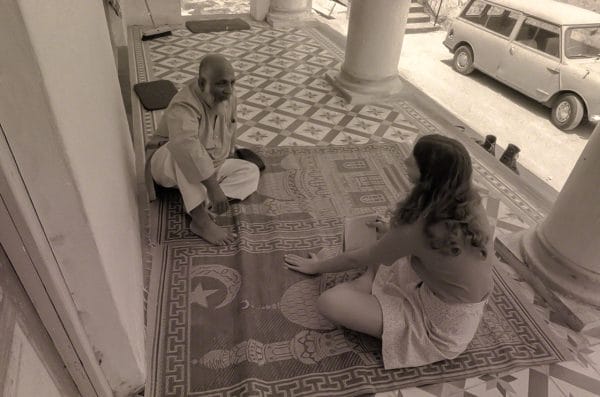
Jackie Faine talks with member of Jumma Masjid 1976 h3-11-42

Jackie Faine talks with Daud Abdul Haqq of Madina Masjid 1976 h3-11-42

Jackie Faine talks with Maulana Saied Piprawala, Jama Masjid 1976 h3-03-22

Roti: makes about 25

5lbs flour, 1 lb butter, 1 teasp. salt, 2 teasp. baking powder, cold water.

1.    Sift dry ingredients together and 'rub' butter into flour. Add enough water to make dough – leave to rise for 15 min.

2.    Roll 25 balls, leave to rise, roll flat, leave 15 mins.

3.    Spread butter on raw rotis and dust with flour. Fry on both sides in a heated pan

4.    Rotis may he served with a meal or used as a shell for curry stews.

Read More
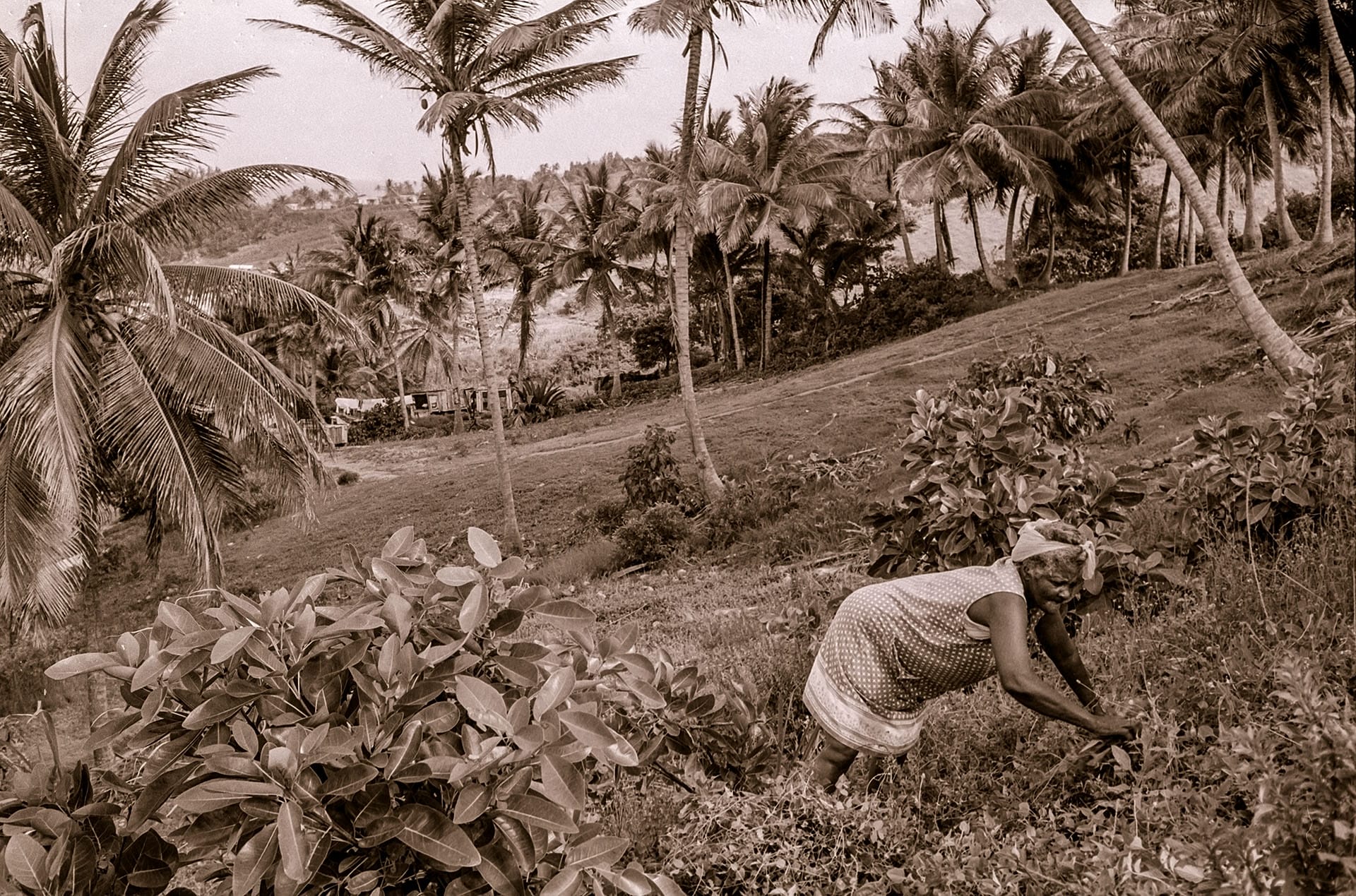
Maud Mayers in her land harvesting medicinal plants
Lifestyle

Home Cures – A Barbadian Tradition

Home Cures - A Barbadian Tradition

by Jackie Faine & Craig Burleigh - June 1976

Published in Hers Magazine –
Vol 1 No. 7 July / August 1976


“Just then she start to name the different weed, and I was really more than glad,
I can’t remember all she call, but these were a few she had. 


She had the Manpeabber, Womanpeabber, Tan–Tan, Fall–back, and Lemon–grass, Minnie–root, Gully–root, Granny–back–bone, Bitter–tally,  Lime–leaf and Caroon ......"


These words were sung by a local performer, Lonnie Rock, about fifty years ago; the melody describes the various bushes that were used medicinally, a part of our culture that is slowly disappearing.

Leon Thorpe, Seamoss Entrepreneur, Cleaver's Hill, Bathsheba June 1976 h2-01-25-sepia

Leon Thorpe, Sea-moss Entrepreneur, Cleaver's Hill, Bathsheba June 1976

Leon Thorpe & Son, Cleaver's Hill, Bathsheba 06-1976-h2-01-34-sepia
Leon Thorpe & Family, Seamoss Entrepreneur, Cleaver's Hill, Bathsheba 06-1976-h2-01-32-sepia

The Caribs were skilled in the art of mixing remedies, and used certain poisonous plants for combat purposes. Their more passive foes, the Arawaks, do not seem to have taken such an occupation as seriously.

With the arrival of the early settlers, and the slaves from West Africa, home curing was expanded; they intruded on the wild vegetation for their mixtures.
The  nature of such "potions", being easily dispensed at the will of its maker, changed extensively and differed markedly from the West African concoctions.

Thus, the Bajan cult had a definition of its own. The  tradition still exists and some people are considered experts.

Leon Thorpe, Seamoss Entrepreneur, Cleaver's Hill, Bathsheba 06-1976-h2-01-27-sepia

Leon Thorpe, a sea-moss trader who lives in Cleavers Hill, St.Joseph, was informative and gave us some knowledge concerning the varied bushes brewed for their healing effects.

He showed us dried leaves of the English Plantain, and informed us that it was valuable for its cooling effect on the body, which aided restful sleep in hot climates such as we experience on the island . He added that it had a cleansing action when consumed as tea. Its brewing is similar to that of the common Indian tea, and Leon remarked that all bush teas were made up in this manner.

Home Cures of Barbados

Dog Dumpling

Home Cures of Barbados

Aloe Barbadensis 

Home Cures of Barbados

Cochineel

The view from Maud Mayer's home, Cleaver's Hill - in the foreground is Christmas Bush 06-1976-h2-02-12-sepia

The view from Maud Mayer's home, June 1976

Home Cures of Barbados

Maud Mayers collects Cerasee (momordica charantia) bush to make herb tea

Some bushes may be steeped and used as rinses—such as jasmine–which has a soothing effect on sore eyes. A large group of bushes are used as cooling agents and seem to be beneficial to the skin. These teas cool over-heated blood, which is a symptom of bad blood. 

The drink Mauby, made up of the bark boiled in water for an hour and flavoured with vanilla essence and sugar, serves as a cooler as well as a cleanser and thirst quencher. He mentioned Cure-for-all, which not only cools and cleans, but affects all ills.

Leon described the bush teas as remedies for colds, all of them maintaining this ability; we discovered that this term, "cold", applied to any ailment associated with pain other than cuts, bruises and burns – a head cold could be a headache of any source.

External injuries require poultices, some being made up by taking cloth and tying leaves around the affected area. As an aside, he mentioned that if you had a sprained wrist, you could use the skin of a conger eel and tie it around the area

Being closely linked with the sea and well learned of seamoss, Leon told us of its qualities. Rich in vitamin 'A', iron and iodine, it has great nutritional value and "helps with the brain". lt assists healing after operations such as tonsillectomies, and also keeps the system clean, not staining the stomach like tea and coffee.

Mentioning that it was a stamina drink for active people, he advised that the more relaxed person would become fat if he used it on a daily basis. It is good nourishment for pregnant women and maintains the reproductive organs. He humoured, "This can be a problem", and "Sea-moss can put you in jail if you drink too much".

Maud Mayers, Home Cures Expert, Cleaver's Hill, Bathsheba-06-1976-h2-01-38

Maud Mayers, Home Cures Expert, Cleaver's Hill, Bathsheba June 1976. In the background her son Tom's fishing boat nears completion.

Leon said that aloes and cochineel, two cactus-like plants, are well used for poultices. He suggested that we should consult Maud Mayers, a woman who lived further down the hill, as she could tell us more about the subject. He managed to amuse us as he quoted "Tan-Tan, Fall-back, Lemon-grass . . . . .Bitter-tally, Lime-leaf . . ."


Maud is a frequent user of poultices, which she creates herself; the art has been passed down from her parents. She knows that poultices can be made up at what she calls "The Doctor Shop", but is content to make home-made recipes using aloe or cochineel gel mixed with Cornmeal. This is heated before it is applied.


Maud recounted an actual experience when she  helped a young lady who had a lump on one of her breasts as a result of  nursing her baby. The woman had been attending a doctor, but the ailment still troubled her and he suggested a poultice.


On the first day, Maud attended to the breast with grave concern and concentration. Making up a poultice using cochineel and cornmeal, she positioned it in the area so that the inflamnation would "draw" at the correct place and secured it with a bandage of clean cloth. She warned that the positioning should be done with extreme care as an incorrect placement can often cause the infection to "draw" at the wrong place and so worsen the inflamed area. Maud maintained that this was a common mistake among less experienced practitioners of the art.

Maud Mayers, Home Cures Expert, Cleaver's Hill, Bathsheba June 1976Maud Mayers, Home Cures Expert, Cleaver's Hill, Bathsheba June 1976

Much pain was experienced by the "drawing"on the first day. The "pack" was removed and replaced with a fresh mixture after a cleaning, this process being repeated twice a day over a period of five days.

The lady missed an appointment with the doctor so as to continue the treatment. On the fifth day, Maud applied pressure to the breast and pure milk was available. Maud remembered, "When I went, it (the breast) was like glass".  

The doctor was amazed as the girl related her curing and permitted her to nurse her child. Apparently, the lady, who now lives abroad, has had no further trouble nursing her subsequent children.

Maud insists that cleanliness is of utmost importance when healing any wound. Nearby, the sea is a popular spot for surfers and every once in a while she is faced with one of these sportsmen who has been cut by the skeg of a board or by the underlying coral of the reef.

She remembers washing and placing poultice into a wound on a man's calf. The cut was about 3 inches long and one inch at its deepest point and the gape was "like pork cut for seasoning". She used heated leaves to cover it; there was a speedy recovery.

The fishermen and women of the nearby Tent Bay wait for the return of the fishing boats with their catch

The fishermen and women of nearby Tent Bay wait for the return of the fishing boats with their catch

Maud is of the belief that it is unwise to bathe in the sea with a cut that has been sustained there. She said that one of the surfers had been cut in the sea and she wamed him not to bathe until it had healed. However, the surf was good and he disobeyed her with painful consequences that night, including delirium.

Aloe is not only useful for cuts, but Maud's surfing friends use it as protection against sunburn, rubbing the gel freely on their skins. It is also good for people who suffer from sinus troubles to eat the gel, but it is very bitter and pungent in smell.

Maud praises aloe as an animal feed. "Aloe makes a beautiful cow, if you feed it that every day", and she has seen a dog that has been fed on it and remarked on its shiny coat.

Maud keeps livestock and "anything that the animal eats can be boiled for tea". She told us the various names of bushes that she drinks, showing a variety that grew on her land. Christmas bush was a popular one for its pleasant smell, and is used to make tea as a dried or green bush. Also, guava, cure-for-all, and sage were good as teas. "Sea-moss is something else", and Maud explained, "It is good for the kidneys and nerves".

The Forbidden Fruit, known also as Adam's Fruit or Cain Fruit, grows on a shrub from which Pain-cure leaves are obtained. Maud assures us, "I do not eat that"; however, she does use it for healing purposes. Recently, she had a bad fall, trip-ping over a water pipe. The  immediate step was to take a hot bath; then, she prepared the Pain-cure leaves, boiling them in water. She added a small amount of methylated spirits to the warm water and rinsed her sprained arm to make it "sweat". The swelling went down eventually.

Maud Mayers prepares to cook flying fish June 1976

Maud Mayers prepares to cook flying fish June 1976

Unfortunately, this accident caused her to use her left hand, which had once been broken and attended to by a doctor. The large amount of strain from house-work made it painful for her, and her daughter took her to the doctor to have it re-examined. Maud admitted that she does not seek professional advice, and the last time, other than this, was six years ago.

She does not take tablets and provides herself with home remedies. Proud of her heritage, she considers herself a doctor and remembers telling a young man who misunderstood her stern firmness, "All good doctors are rough".

Ill association with Obeah has given a disreputable name to some folk medicine, and it is often mocked. With the advancement of modern science and the circulation of synthesized drugs the tradition of folk healing is a dying art.

A fisherman wades ashore at Tent Bay with a heavy catch of flying fish.

A fisherman wades ashore at Tent Bay with a heavy catch of flying fish.

Read More
Ladies of the Land - Easy Hall Plnt - Moving On 1980-bds44-17
Lifestyle

Ladies of the Land

Ladies of the Land

Our Agricultural Heroes

The agricultural burden in the country side of Barbados has fallen heavily on the women field workers.

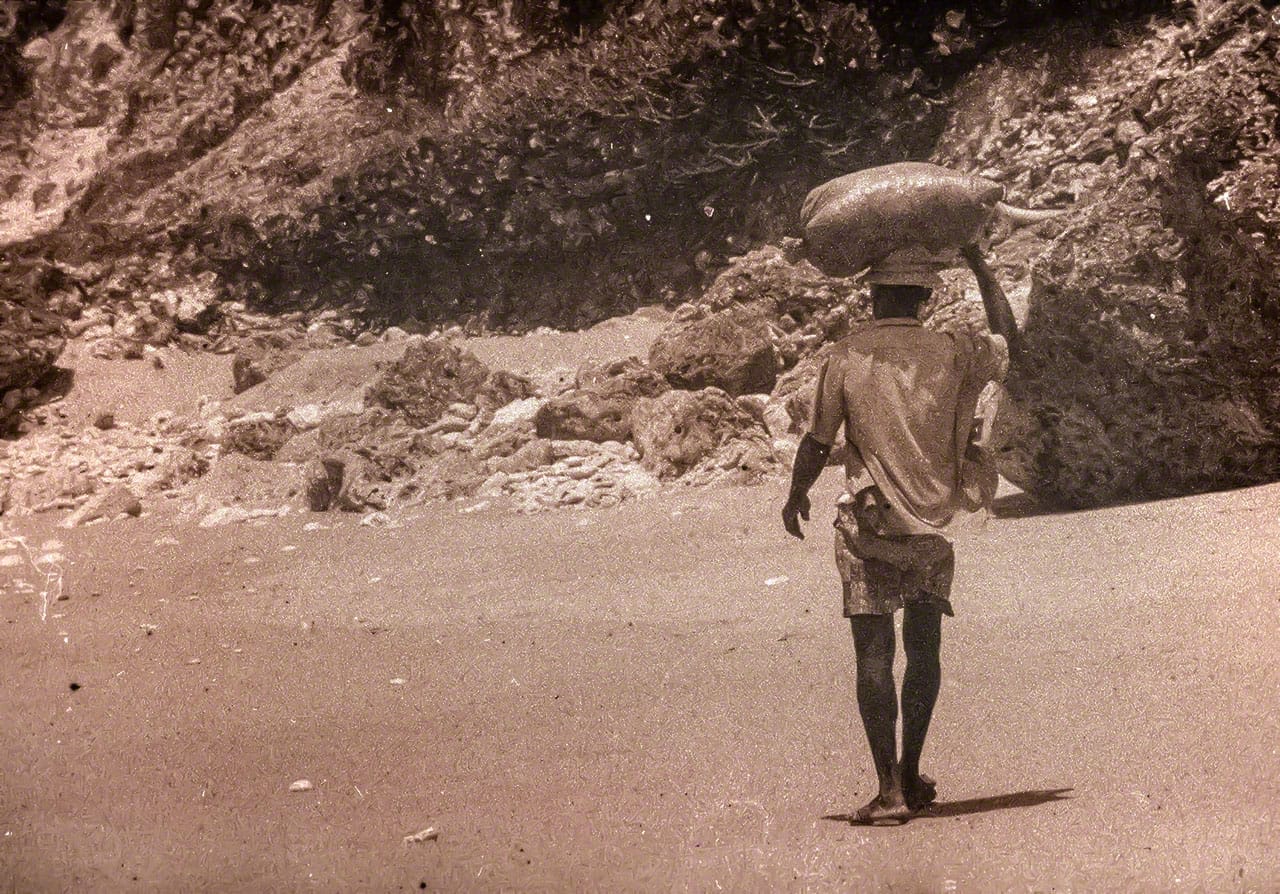
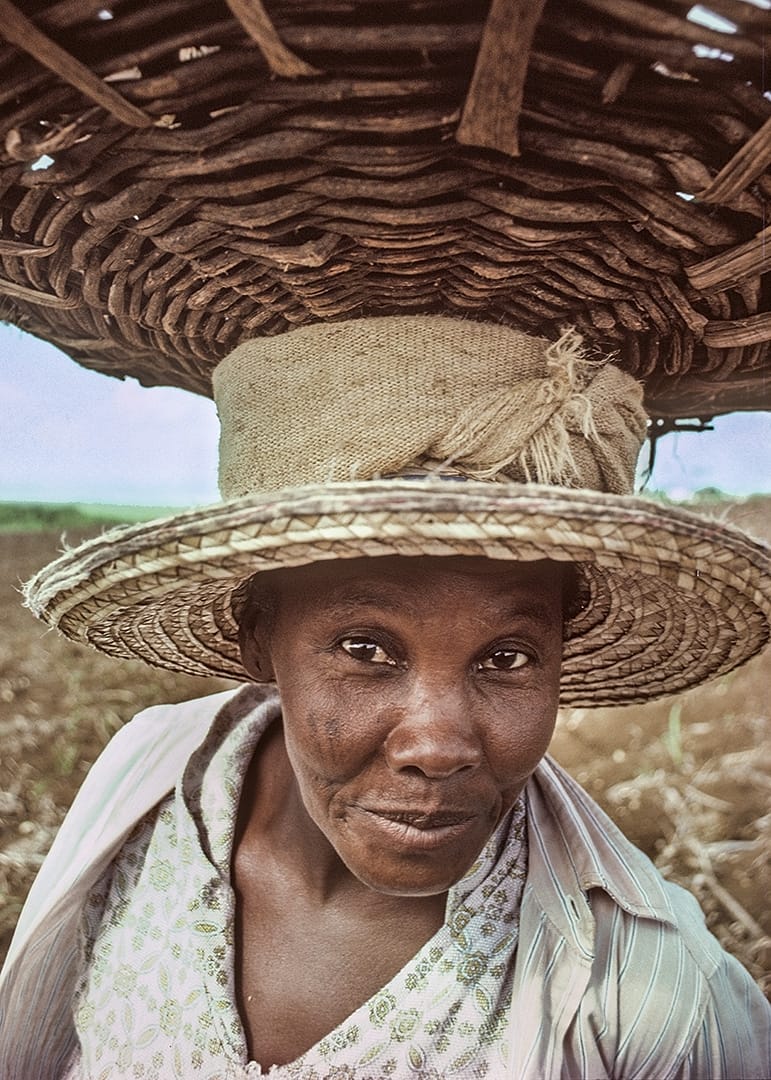
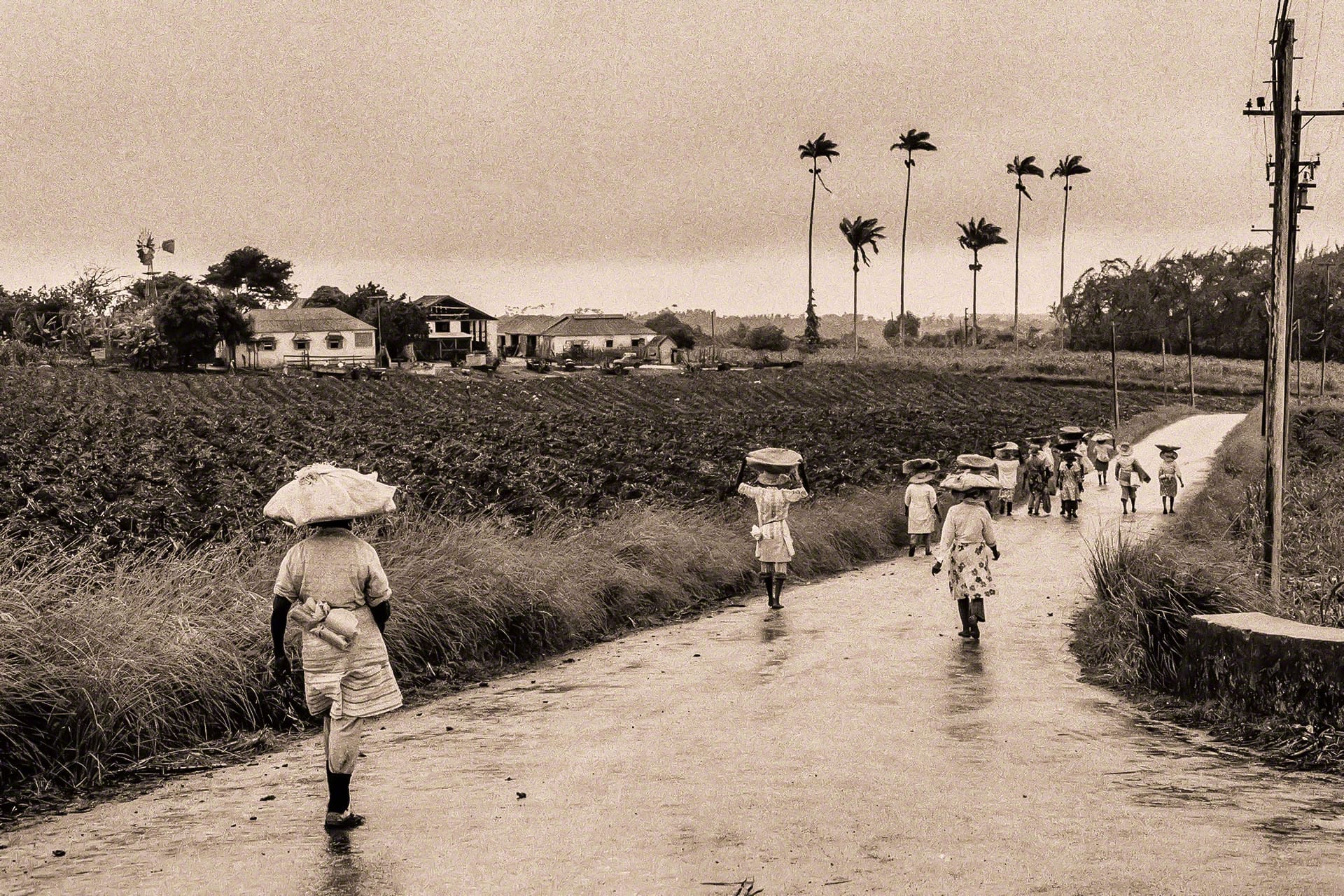
Before mechanical harvesters and loaders made their appearance in the late 70s it was the women who carried the heavy bundles of cane on their heads and climbed ladders up the side of trucks to hand the bundles to male workers on the top of the truck.

Ladies of the Land - Heading Cane - Blackmans Plnt -1979-bds41-14

The planting and weeding was also mainly done by women. Men did most of the cane cutting and handling of mechinery such as driving tractors and working in the sugar factories.

It seems to me that women have always had the hardest work in Bajan agriculture.

They were often there in the fields, rain or shine, and when I did photos the women always had humourous responses to being the center of attention.

Ladies of the Land - Easy Hall Plnt - Elsie Lashley 1980-bds44-29

When I returned to Barbados in 1974 I started to photograph some of the field work being done at the plantation nearby - Mount Wilton, St. Thomas.  

This is where I met Edna McLean and her colleagues planting sugar cane ratoons.

Edna McLean, Mt. Wilton Plnt. St Thomas

I regret that I didn't spend more in-depth time with these subjects in particular – I was not a very good journalist – very few names, no interviews, no first person descriptions of what their whole day was like.

The great reward of getting these images more accessible to the public is that I am slowly finding out names of some of the people as others who knew them can fill in the missing details.

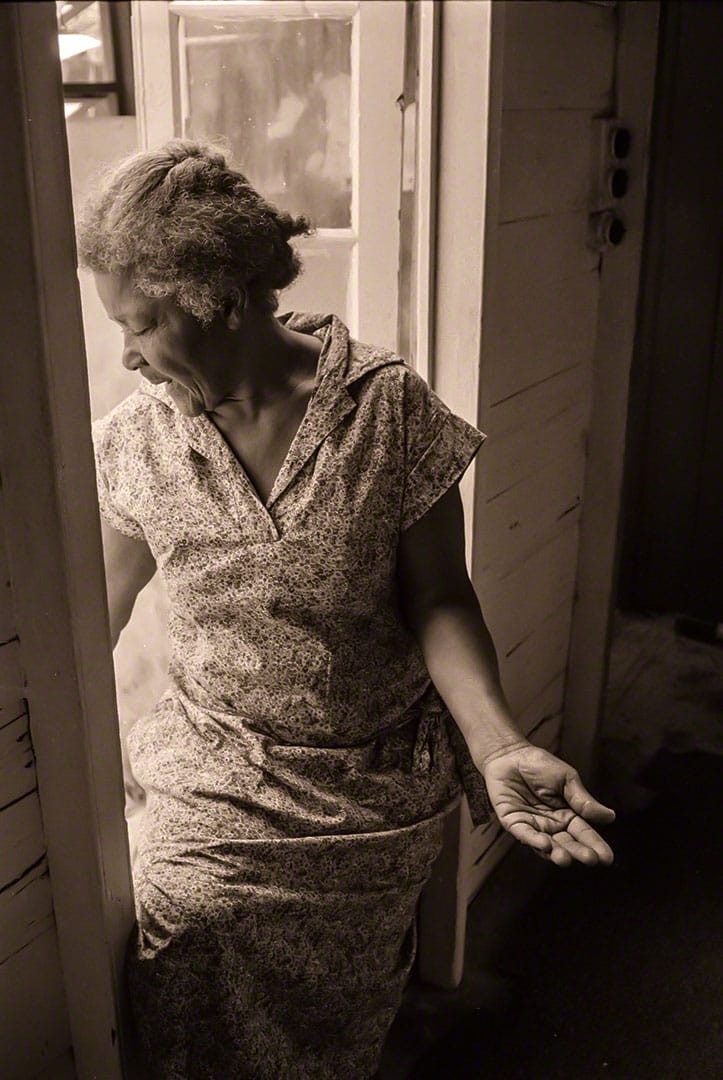
It is fantastic to have a visitor say "That's my Dad in this photograph with Queen Elizabeth" or that someone who worked directly with the workers of a particular plantation can name the person – as was the case with Elsie Lashley pictured here with her huge umbrella - could this be the umbrella that Rihanna was talking about?

Ladies of the Land - Easy Hall Plnt - Elsie Lashley 1980-bds44-34-sepia
Read More
Chris Alleyne Leant over at Bushy Park 1980
Lifestyle

Chris Alleyne – A Tribute

My best friend Chris Alleyne passed away recently. It saddens me that he will not be making more visual art or having fun on his guitar. 

Our deepest condolences to Adam, Shaun and the family.

Chris was a 'Doer' – he grabbed life by the horns and ran with it!

I got to know him in 1975 when my brother John started going out with Pilar Heath. We often hung out with her family at the Dynamite Bar on their gallery drinking rum until 2 am. Chris was a friend of the family so he was often there with us - a guitar always nearby and some bawdy songs that would have everyone in stitches!

We got friendly having many common interests – photography, guitar, motor sport – often it seemed that I was a voyeur on the outside looking in through my lens, while Chris was often deep within an activity.

Chris Alleyne chatting with the guys in Sugar Hill - 1975 N26-15-20
Chris Alleyne Testing the Limits! Woodburn, 1980 #5

In motor sport he wasn't on the outside photographing it – he was sitting in the navigator's seat with Freddie Mapp in his Escort or driving special stages testing the limits.

Of course he had always been into motorcycles so there he was in the fray of the dirt bike guys that started racing at Bushy Park and going on rides in the wild areas of Barbados.

In those days working on your own car was almost a neccesity. When my old Riley Elf was in need of serious help he was there helping me rebuild the engine and then get it into the replacement Mini body I bought from Val Knowles.

Jackie and I were going out and we would often visit Chris at Black Bess and have lunch there with Granny Parris – great memories. He was working at the plantation then and he would take us out in the fields and show us the sugar cane root boorers that were attacking his canes or the fields of onions they were growing. He was always excited and engaged with whatever he was involved with.

Chris Alleyne Testing the Limits! Woodburn #1
Chris Alleyne Testing the Limits! Woodburn #2
Chris Alleyne Testing the Limits! Woodburn #4

I photographed his and Valerie's Wedding and we all got closer over those years. Then they were off to the States for a year or two while Chris pursued study in professional photography – they returned with Chris managing the first official color photo lab in Barbados.

All of my color portrait or event color negatives were processed at SunColor under Chris – I would stop at the lab to pickup a shoot and always had to bum a cigarette from him as I was usually in some stage of quitting.  

Chris's strong entrepreneurial side developed further with his forming SunBeach bringing internet communications to Barbados in the 80's. By this time Jackie and I had moved to California so alot of what was happening back in Bim is fuzzy, but whenever we got the chance to return Chris would be there to get us from the airport or lend us a car until we got setup and of course bunk in at his house until our rental became available.

May you sail your new journeys with

"Fair Winds and Following Seas"

Read More